

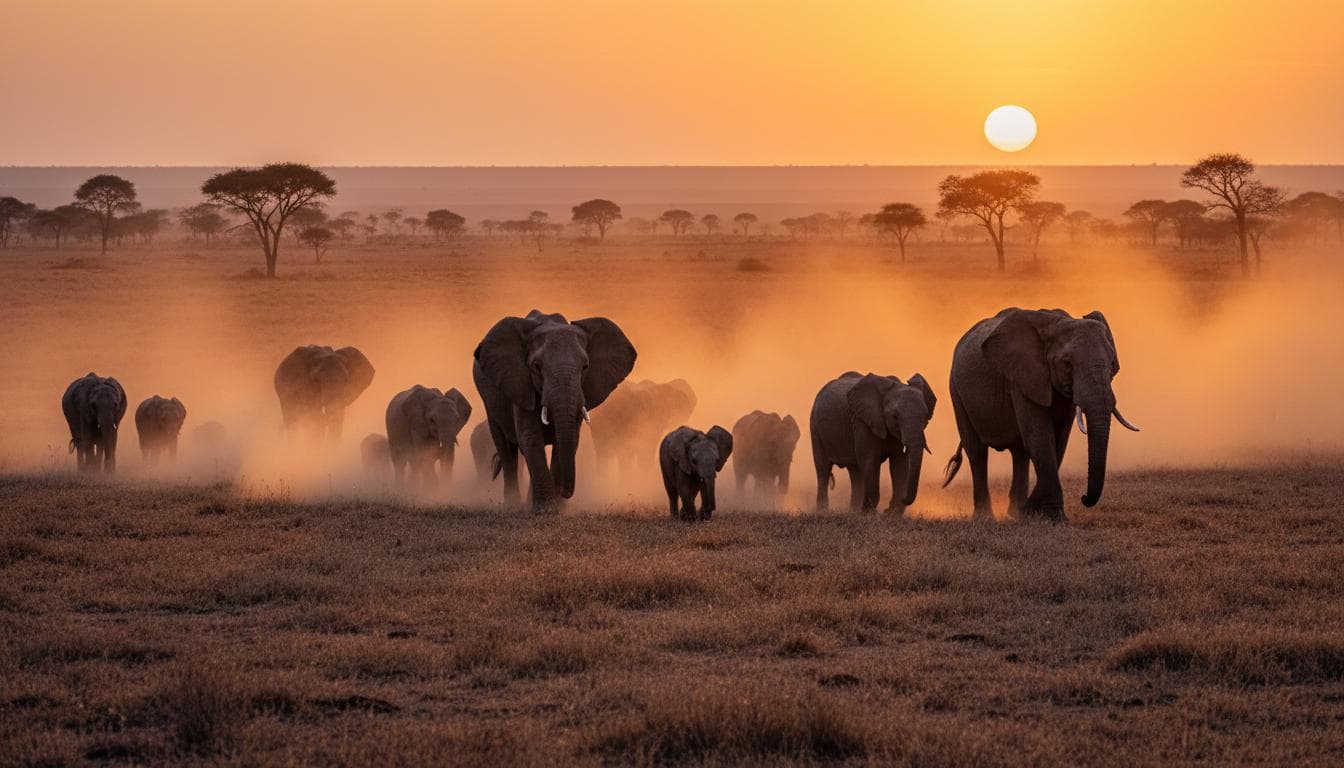
Kenya's three flagship parks each tell a different story. Side-by-side on wildlife, scenery, accommodation, and accessibility — so you pick the right one (or the right combination).
Most first-time visitors to Kenya assume they should go to Maasai Mara because they've heard of it. They're often right — but "the Mara" isn't always the best fit for what you actually want. Here's how Kenya's three flagship parks compare, from someone who guides in all of them.
At a glance
| Maasai Mara | Amboseli | Tsavo | |
|---|---|---|---|
| Best for | Big cats + Migration | Elephants + Kilimanjaro views | Wilderness + low crowds |
| Size | Medium (1,510 km²) | Small (392 km²) | Huge (22,000 km² across East + West) |
| Drive from Nairobi | 5–6 hrs | 4 hrs | 5–6 hrs (East), 4–6 hrs (West) |
| Fly from Nairobi | 45 min, $250–350 | 30 min, $200–280 | 45 min, $250–350 |
| Best time | Jul – Oct (Migration) | Jun – Oct, Jan – Feb | Year-round |
| Park fee/day | $100 | $70 | $60 |
Maasai Mara — for the big-name spectacle
The Mara is Kenya's flagship for a reason. It has the highest predator density in Africa, year-round resident lion and cheetah populations, the world-famous Great Migration crossings between July and October, and immediately recognisable open savannah landscapes from every nature documentary you've seen.
It's also the most crowded. In Migration season, popular crossings draw 30+ vehicles. The reserve itself is busy; the surrounding conservancies (Mara North, Olare Motorogi, Ol Kinyei, Naboisho) are far quieter and allow off-road driving, night drives, and walking safaris that the reserve doesn't.
What you'll actually see
- Big cats: lion (often in prides of 10+), cheetah, leopard. Sightings on most game drives.
- Elephant, buffalo, giraffe, plains game throughout the year.
- The Migration: 1.5 million wildebeest + 250,000 zebra, July to October.
- Mara River crossings (the dramatic scene): peak Aug–Sep.
- Rhino: small population, mostly in the Mara Triangle.
Amboseli — for elephants and Kilimanjaro
Amboseli is small but special. It sits at the foot of Mount Kilimanjaro (which is across the border in Tanzania, but the view from Kenya is the iconic one). The park is famous for huge elephant herds, often with multiple tuskers in a single group — these are the elephants you've seen on postcards, silhouetted against the snow-capped peak.
It's also one of the more affordable parks (lower fees, closer to Nairobi). Game-viewing is concentrated and high-quality even on a 2-day visit. The trade-off: less predator action than the Mara, smaller scale, and the landscape can feel dusty in the dry season.
What you'll actually see
- Elephant herds with mature tuskers, year-round.
- Mount Kilimanjaro (clearest views: dawn, dry-season mornings, Jun–Sep).
- Plains game: zebra, wildebeest, hippo, giraffe, buffalo.
- Big cats present but harder to find than in the Mara.
- Excellent bird-watching, especially around the swamps.
Tsavo — for wilderness and solitude
Tsavo East and Tsavo West together form one of the largest wildlife parks in the world — bigger than some entire countries. The scale is the point: vast red-earth plains in Tsavo East, rocky escarpments and lava flows in Tsavo West, an order of magnitude more space than the Mara with a fraction of the vehicles.
This is the park for travellers who want to feel like they're actually in wilderness, not at a wildlife theme park. Game-viewing is excellent but spread out — you drive further between sightings. Tsavo's famous red elephants get their colour from rolling in the iron-rich dust. It's also on the way to the coast, making it a natural stop between Nairobi safaris and a Diani beach extension.
What you'll actually see
- Large elephant populations (often dusted red).
- Lion (including the famously maneless males), leopard, cheetah.
- Tsavo West: Mzima Springs (clear pools with hippo and crocodile), Shetani lava flows.
- Tsavo East: Yatta Plateau (world's longest lava flow), Aruba Dam wildlife.
- Crocodile and hippo in the Galana and Tsavo rivers.
Which one for which trip?
| Your situation | Park combination |
|---|---|
| First-time visitor, 5–7 days, want the iconic safari | Maasai Mara (3 nights) + Lake Nakuru (1 night) |
| Short trip, 3–4 days from Nairobi | Amboseli alone (huge value per day) |
| Returning visitor wanting something different | Tsavo + Amboseli combo |
| Migration is the goal | Maasai Mara (4 nights minimum) Jul – early Oct |
| Bush + beach | Tsavo East + Diani or Watamu (Tsavo is on the way) |
| Photography focus | Amboseli (Kilimanjaro) + Maasai Mara (cats) |
| Honeymoon | Conservancy Mara (3 nights) + Diani (3 nights) |
Don't sleep on the lesser-known parks
If you have time for a longer trip, add Samburu (unique northern species: Grevy's zebra, reticulated giraffe, Beisa oryx) or Lake Nakuru (flamingos and rhino sanctuary, easy add-on to a Mara trip). For walking safaris and lower budgets, Hell's Gate is one of the few parks where you can walk and cycle.
Free planning guide
Like this? Get the full planning guide.
The complete 10-section Kenya Safari Planning Guide — costs, parks, packing, tipping, common mistakes — straight to your inbox.
Keep reading
More from our travel guides
 Destinations
Best Time to Visit the Maasai Mara — Month by Month
The Great Migration peaks July–October, but the Mara is spectacular year-round. Here's what you'll actually see each month, plus the trade-offs of price, crowds, and weather.
 Planning
How Much Does a Kenya Safari Cost in 2026? A Real Breakdown
Park fees, accommodation, guides, transport — the full ledger of what your Kenya safari actually costs, with real per-day numbers for budget, mid-range, and luxury tiers.