

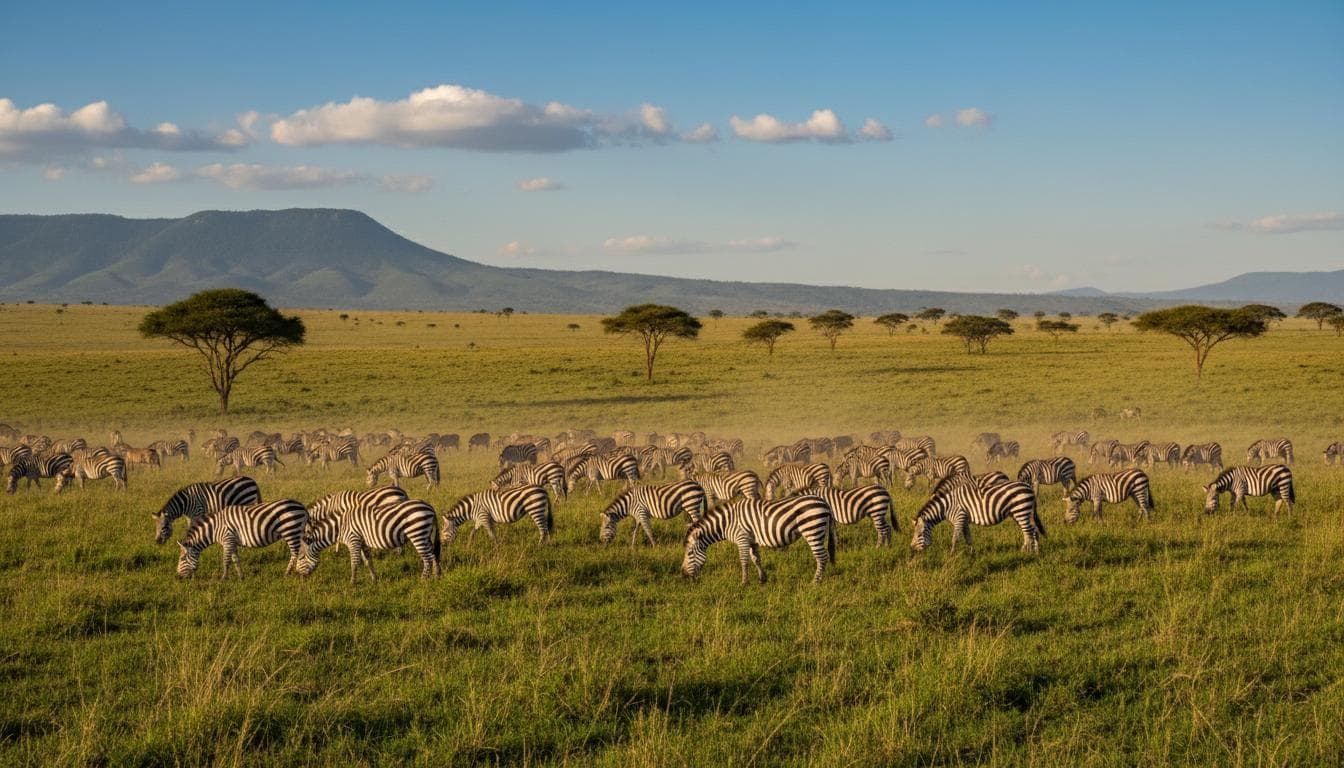
The Great Migration peaks July–October, but the Mara is spectacular year-round. Here's what you'll actually see each month, plus the trade-offs of price, crowds, and weather.
Ask 10 travel agents "when should I visit the Mara?" and you'll hear nine of them say "July to October." They're not wrong — but they're not telling you the whole story. The Maasai Mara is one of the densest wildlife reserves on Earth every single month of the year. The question is what trade-off you want to make on price, crowds, weather, and what specific wildlife event you're chasing.
The short version
| Season | Months | What you get | Trade-off |
|---|---|---|---|
| High / Migration | Jul – Oct | Wildebeest river crossings, peak game-viewing | Most expensive (+40–60%), camps book a year ahead |
| Shoulder / Dry | Jan – Feb | Clear skies, easy game-viewing, fewer vehicles | Some camps closed |
| Green / Short rains | Nov – Dec | Lush landscape, calving, low prices | Afternoon showers |
| Low / Long rains | Apr – May | Lowest prices, no crowds, dramatic skies | Some roads impassable, mosquitos |
Month by month
January — Newborns and clear skies
The short rains have finished. The Mara is green and the resident game (zebra, topi, gazelle, the Mara's famous big cats) is plentiful. Wildebeest calving begins in late January in the southern Serengeti — across the border — which means lots of predator action follows. Skies are clear, daytime temperatures sit at 26–28°C, mornings are cool (12–15°C). Excellent value: it's not migration season so prices are mid-range, but the wildlife density is high.
February — Cat-watching at its best
The dry weather continues. With grass still short from the recent rains, big-cat sightings are exceptional — lion prides relaxed in the open, leopards visible in the riverine forests, cheetah hunting in the plains. Photographic conditions are ideal.
March — Last of the dry, first of the rain
Game-viewing is still very good through the first half of March. The long rains usually arrive in the third week. If you can travel in the first two weeks of March you get peak dry-season game-viewing at shoulder-season prices.
April – May — The long rains (and the bargain season)
Daily afternoon thunderstorms. Some unpaved tracks become impassable. Some smaller camps close entirely for staff leave and maintenance. Mosquitos are at their peak. In exchange, accommodation is 30–50% cheaper than peak season, you'll often have a sighting entirely to yourself, and the landscape is at its most photogenic — emerald grasslands and dramatic skies. Recommended for return visitors, photographers, and budget travellers; not ideal for a once-in-a-lifetime first safari.
June — The shoulder sweet spot
Rains end, plains dry out, grass shortens, animals concentrate around the remaining waterholes. Migration herds are still in the southern Serengeti but the resident game is exceptional. Prices haven't spiked yet. Late June is one of our most-recommended windows for travellers who want peak conditions without peak crowds.
July – October — The Great Migration
The legendary wildebeest crossing of the Mara River happens in this window. Roughly 1.5 million wildebeest, zebra, and Thomson's gazelle stream north from Tanzania's Serengeti, fording the Mara River while crocodiles and predators feast. It is genuinely one of the most dramatic wildlife events on Earth.
Caveats: this is peak season. The best camps inside the conservancies are booked a year in advance. Prices are 40–60% higher than shoulder months. Popular crossings draw 30+ safari vehicles. Crossings aren't on a schedule — you can spend three days waiting and see one in five minutes; or arrive at a crossing already in progress on your first morning. We strongly recommend at least 4 nights inside Mara if Migration is your main goal.
November – December — Short rains, calving, low prices
Short rains arrive in November, usually in the form of afternoon showers that pass quickly. The Mara becomes lush again. Migration herds begin their return south. The end of the year — Christmas and New Year — is a secondary peak as European families travel; book early if you want that window. Early to mid-November is one of our quietest, best-value periods.
Match the month to the trip
| Your priority | Best months |
|---|---|
| Once-in-a-lifetime Migration crossing | Late Jul – early Sep |
| Photography (light, drama, sparse crowds) | Feb, Jun, Nov |
| Lowest possible price | Apr, May, early Nov |
| Honeymoon (warm days, clear skies, no monsoon) | Jan – Feb, Jun – Jul |
| Family-friendly with kids on school holiday | Late Jul – Aug, late Dec |
Free planning guide
Like this? Get the full planning guide.
The complete 10-section Kenya Safari Planning Guide — costs, parks, packing, tipping, common mistakes — straight to your inbox.
Keep reading
More from our travel guides
 Destinations
Maasai Mara vs Amboseli vs Tsavo — Which Park Is Right for You?
Kenya's three flagship parks each tell a different story. Side-by-side on wildlife, scenery, accommodation, and accessibility — so you pick the right one (or the right combination).
 Planning
How Much Does a Kenya Safari Cost in 2026? A Real Breakdown
Park fees, accommodation, guides, transport — the full ledger of what your Kenya safari actually costs, with real per-day numbers for budget, mid-range, and luxury tiers.