

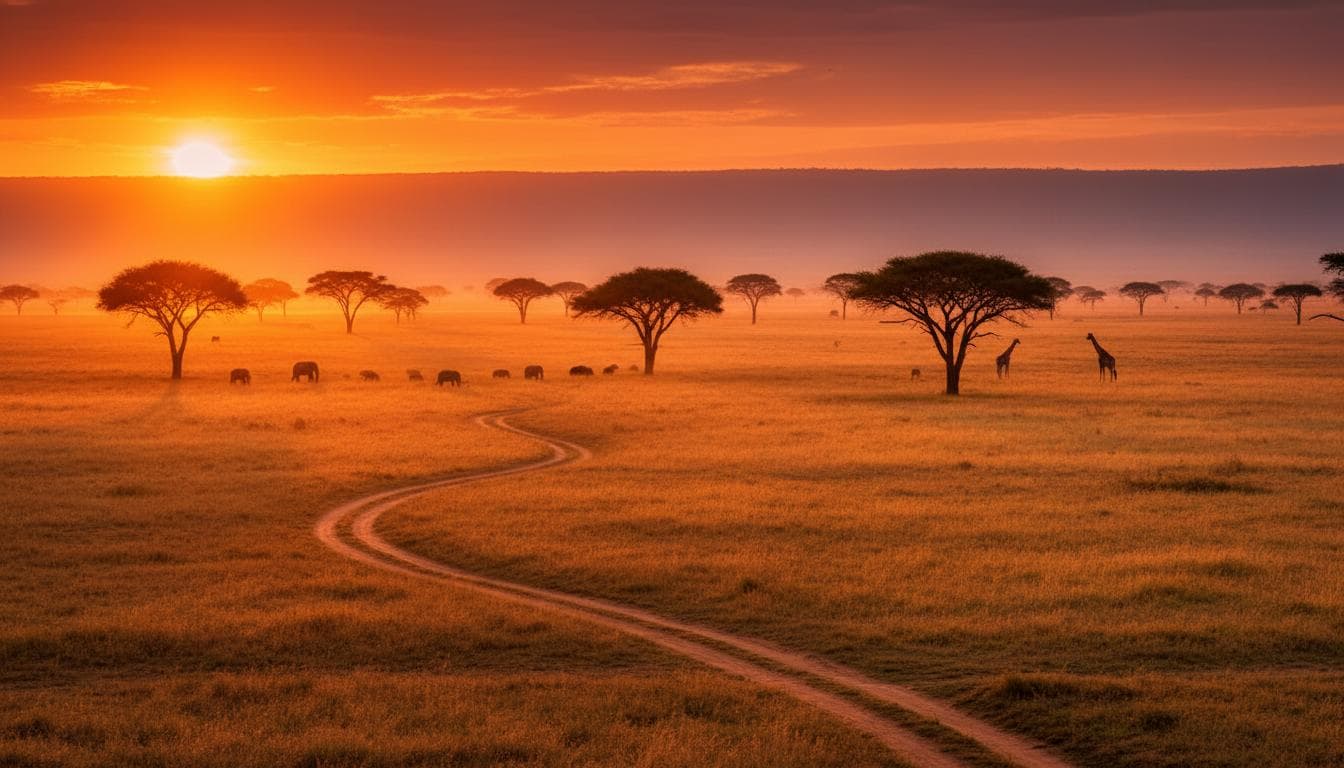
Park fees, accommodation, guides, transport — the full ledger of what your Kenya safari actually costs, with real per-day numbers for budget, mid-range, and luxury tiers.
The honest answer most safari operators won't give you: a Kenya safari can cost anywhere from €120 to €1,200 per person per day. That 10× range isn't marketing fluff — it reflects real differences in accommodation, vehicle, group size, and which parks you visit. This guide breaks down where every euro goes so you can budget with eyes open.
The three cost tiers in one table
Most operators (us included) price safaris in three bands. Here's what each one actually buys you, per person per day, on a standard 5-day Maasai Mara + Lake Nakuru itinerary:
| Tier | Per day | Accommodation | Vehicle |
|---|---|---|---|
| Budget / Group joining | €110–€160 | Permanent tented camps, basic ensuite | Shared 4×4 minivan or land cruiser, 6–7 guests |
| Mid-range | €250–€400 | Mid-range lodges with pool, en-suite cottages | Private 4×4 land cruiser, up to 6 guests |
| Luxury | €600–€1,200+ | Iconic lodges (Mara Serena, Governors), all-inclusive luxury tented camps | Private 4×4 or fly-in by light aircraft, 2–4 guests |
Park & conservancy fees you can't avoid
Every park you enter charges a per-day fee that's set by Kenya Wildlife Service (KWS) or the conservancy. These are non-negotiable and bundled into any reputable package. As of 2026 the most common ones are:
| Park / Conservancy | Non-resident adult, per day |
|---|---|
| Maasai Mara National Reserve | USD 100 |
| Mara Conservancies (Mara North, Olare Motorogi, etc.) | USD 110–130 |
| Amboseli National Park | USD 70 |
| Tsavo East / West | USD 60 |
| Lake Nakuru National Park | USD 60 |
| Samburu National Reserve | USD 80 |
| Ol Pejeta Conservancy | USD 105 |
Conservancies (the private wildlife areas adjacent to the public reserves) cost more — but they also mean fewer vehicles per sighting, off-road game drives, night drives, and walking safaris that aren't allowed inside the reserves themselves. Worth the premium for serious wildlife watchers.
Accommodation: the lever you control most
Once you've paid park fees, accommodation is the single biggest line item you have agency over. The same Maasai Mara experience can cost €60 a night at a permanent tented camp or €1,400 a night at a Governors' Camp. Both will put you in front of the same lion at sunrise.
- Budget tented camps (€60–€120/night): permanent canvas tents on raised platforms, ensuite bathroom, basic mosquito netting, shared dining tent. Comfortable but not luxurious.
- Mid-range lodges (€180–€350/night): proper buildings with pool, restaurant, en-suite cottages, hot showers, and reliable wifi.
- Luxury tented camps (€500–€900/night): private decks, full butler service, plunge pools, gourmet meals, all-inclusive drinks.
- Iconic lodges (€900–€1,400+/night): Governors' Mugie, Angama Mara, Mara Plains. Helicopter transfers, hot-air balloon included, world-class chefs.
Transport: drive or fly?
Most safaris start in Nairobi. From there you either drive (5–7 hours to the Mara, depending on traffic and road conditions) or fly (45 minutes by light aircraft from Wilson Airport). Driving keeps the budget down and lets you see the Great Rift Valley along the way. Flying costs roughly €250–€350 each way per person but reclaims a full day of game-viewing time and skips a rough stretch of road from Narok onward.
What's NOT usually included
Even all-inclusive packages have edges. Read the fine print for:
- International flights — almost never included; budget €600–€1,200 from EU, €1,000–€1,800 from US.
- Kenya eTA (electronic travel authorisation) — USD 30, applied for online before travel.
- Vaccinations — Yellow Fever (~€50), anti-malarials (~€40 for 2 weeks).
- Travel insurance — €40–€80 per person; non-negotiable.
- Tips for guides and camp staff — budget USD 10–15 per guest per day for the guide, USD 5–10 per day for camp staff (collected centrally).
- Optional activities — hot-air balloon safari (€420), Maasai village visit (€20–€30), spa treatments.
- Premium drinks — house wine and beer are usually included at lodges; premium spirits and imported wine are not.
Best-value lengths
Per-day cost drops as your safari gets longer because the fixed costs (international flight, transfer in/out, vehicle setup) amortise over more days. We see sweet spots at:
- 3 days — minimum to see one major park properly. Good for layovers or short breaks.
- 6–7 days — covers two parks with travel time. The default for most first-time visitors.
- 10–14 days — multi-park grand tour with beach extension. Best per-day value.
How to actually cut costs (without cutting quality)
- Travel in the green season (March–May or November). Same wildlife, 30–40% off accommodation, lush landscapes.
- Book a group-joining safari. You share a vehicle and guide with up to 5 other travellers, dropping per-person cost by 50–60% vs. a private trip.
- Skip Maasai Mara peak Migration weeks (mid-Jul to early-Sep). Mara is spectacular year-round and the rest of the year costs less than half.
- Spend more nights in cheaper conservancies, fewer in iconic lodges. Most of the wildlife magic happens on the game drive, not at dinner.
- Get prices in both EUR and USD via the toggle on each package — exchange rates can swing 5–8% in your favour.
Free planning guide
Like this? Get the full planning guide.
The complete 10-section Kenya Safari Planning Guide — costs, parks, packing, tipping, common mistakes — straight to your inbox.
Keep reading
More from our travel guides
 Destinations
Best Time to Visit the Maasai Mara — Month by Month
The Great Migration peaks July–October, but the Mara is spectacular year-round. Here's what you'll actually see each month, plus the trade-offs of price, crowds, and weather.
 Destinations
Maasai Mara vs Amboseli vs Tsavo — Which Park Is Right for You?
Kenya's three flagship parks each tell a different story. Side-by-side on wildlife, scenery, accommodation, and accessibility — so you pick the right one (or the right combination).